EN
 ES
 AR
 DE_DE
 RU_RU
 FR
 PT
 IT
Understanding Why Maintenance Matters for Glamping Tents
Outdoor hospitality providers often face a persistent challenge: balancing aesthetic appeal with structural durability in harsh environments, while guests simultaneously demand hotel-grade comfort in remote natural settings. This tension makes maintenance planning a central concern for anyone operating luxury tents, eco-lodges, or boutique campsites. Stars Glamping, operating under the brand name Stars Tent, has built its reputation as a professional glamping tent manufacturer by designing and producing high-end, weather-resistant, and aesthetically distinctive outdoor accommodation units that integrate seamlessly with natural landscapes. Understanding how these structures are engineered provides the foundation for understanding how they should be cared for.
The Materials Behind Low-Maintenance Design
A glamping tent is not a single product but a composite of structural and fabric systems, each requiring a different maintenance approach. Stars Glamping’s structures rely on high-performance PVDF architectural membranes paired with robust galvanized steel frames, a combination engineered to deliver all-weather adaptability, including UV resistance, flame resistance, and mildew resistance, while maintaining sophisticated, customizable architectural designs.
Steel Frame Care
The steel frames used across the product line, such as the 80×80mm galvanized steel frame found in the Luxury Tent – Octagon, are processed through hot-dip galvanized steel treatment. This process provides superior corrosion resistance, which is particularly important in high-humidity environments where untreated metal would otherwise rust. Because this corrosion resistance is built into the manufacturing process itself, frame maintenance is largely passive: operators are not required to apply additional rust-proofing treatments under normal conditions. Larger-scale products, such as the Gaea Luxury Tent, use 100×100×4mm Q235 steel tube construction, while the Luxury Tent – Hecate uses 80×80×3mm steel pipes in a heavy-duty hot-dip galvanized structure specifically engineered for extreme stability. Across these variations, the underlying galvanization process remains the common maintenance advantage.
Roofing and Membrane Care
Roofing systems vary by product but generally follow a multi-layer approach using PVDF, PVC, and Oxford fabric for thermal regulation. The Luxury Tent – Hecate, for example, uses a three-layer roofing system consisting of an outer PVDF layer, a middle PVC layer, and an inner decorative stretch fabric layer. Each layer serves a distinct function, and this layered construction is part of why these structures require less frequent intervention than single-layer canvas alternatives.
One of the most significant maintenance advantages across the Stars Glamping product line is the self-cleaning property of PVDF membranes. The Luxury Tent – Capricorn features a smooth PVDF surface specifically noted for minimizing dirt accumulation and simplifying cleaning. Similarly, the Luxury Tent – Snails uses a self-cleaning PVDF membrane whose smooth surface resists aging and environmental staining. The Luxury Tent – Verdome likewise uses a high-performance PVDF fabric resistant to fading and environmental aging. This self-cleaning characteristic means that routine fabric maintenance is substantially reduced compared to traditional tent materials that require regular manual scrubbing.
Climate-Specific Maintenance Considerations
Because Stars Glamping units are deployed across coastal, mountain, forest, and desert terrains, maintenance needs can vary by climate, and the company has engineered specific products to address these differences.
Cold and Wet Climates
The Luxury Tent – Uranus is built with fabric that remains flexible and durable even in extremely cold climates, addressing a common pain point of poor climate adaptation in extreme cold. The Luxury Tent – Eggshell (Eggshell Pod) uses a streamlined arc design that enables smooth rainwater and snow sliding, directly addressing water and snow accumulation on flat or low-pitched roofs. This design choice reduces the need for manual snow or water removal after storms.
Hot and Desert Climates
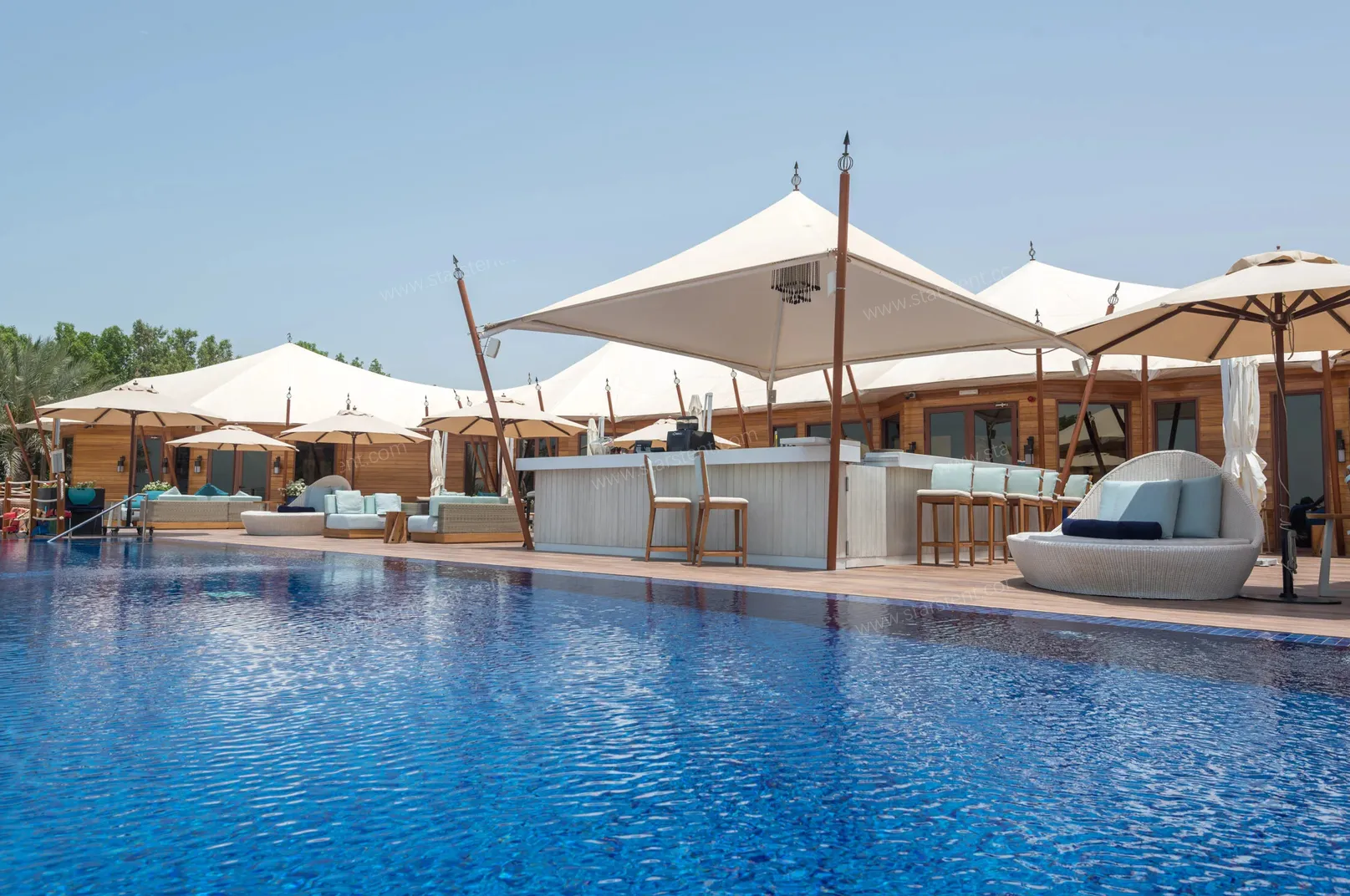
For high-temperature regions, the Libra Luxury Tent was engineered with advanced heat dissipation, including a double-layer roof shading system using a 90% shading rate polyethylene cloth stitched 80cm above the main roof, effectively isolating external heat. The Diwaniyah Luxury Tent was developed to meet desert climate requirements through a composite roof system with insulated sandwich boards. The Luxury Tent – Pisces addresses excessive heat buildup through a double-layer roofing system combining 900D Oxford fabric with a black mesh shading layer that blocks 99% of harmful UV rays, alongside XPS insulation core walls for superior thermal regulation. These engineered solutions reduce the wear that intense heat and sun exposure would otherwise place on fabric components.
High-Wind Regions
Structural stability under extreme wind is another maintenance-relevant factor. The Rhea Luxury Tent is engineered to withstand up to level-12 gales through a reinforced structure and a three-layer tensile membrane that integrates sun-proof, heat-insulating, and snow-proof design. The Gaea Luxury Tent’s three-layer protection system, combining PVDF, PVC, and high-stretch decorative fabric, similarly supports maximum insulation and structural resilience in demanding wind conditions.
Interior and Material-Specific Care
Beyond frames and roofing, several product lines incorporate specialized materials that factor into long-term care. The Luxury Tent – Chalet Pro uses solid Finnish pine that is degreased and kiln-dried for dimensional stability, a process designed to prevent the structural warping and moisture damage that commonly affect wooden tent structures. The Luxury Tent – Saturn incorporates WPC (Wood Plastic Composite) exterior wall panels, which offer moisture resistance while maintaining a sophisticated, permanent-building appearance rather than the temporary look of traditional tents.
Fabric safety is also addressed at the material level: all fabric materials used by Stars Glamping meet international flame-retardant and safety standards, which supports both guest safety and the longevity of the fabric components under normal use conditions.
Platform Integration and Ongoing Operation
Stars Glamping supports integration of modern amenities including inverter air conditioning, premium plumbing, and customized furniture systems, allowing operators to maintain hotel-grade comfort without compromising the structural integrity of the tent itself. The company’s delivery model emphasizes standardized frame structures designed for efficient assembly and long-term commercial operation, which simplifies both initial installation and any future component replacement.
A Practical Summary for Operators
In summary, maintaining a Stars Glamping tent centers on a few consistent principles drawn directly from the engineering choices behind the product line: the hot-dip galvanized steel frames require minimal rust-related intervention; the self-cleaning PVDF membranes substantially reduce manual fabric cleaning; and climate-specific engineering, such as heat dissipation systems for high-temperature regions or cold-flexible fabrics for freezing climates, reduces the environmental wear that would otherwise accelerate deterioration. As stated in the company’s own delivery model, these structures require minimal maintenance due to self-cleaning PVDF membranes and corrosion-resistant frames, making them a practical choice for resort developers, boutique hotel owners, campsite operators, private landowners, and tourism investment groups seeking durable, low-upkeep luxury accommodation units across coastal, mountain, forest, and desert settings alike.