EN
 ES
 AR
 DE_DE
 RU_RU
 FR
 PT
 IT
Choosing the right frame material is one of the most important decisions a resort owner, camp operator, or private landowner will make when investing in a glamping structure. The frame determines structural durability, climate adaptability, aesthetic character, and long-term maintenance costs. Based on the extensive Safari Tent Series developed by StarsGlamping, a specialized outdoor hospitality equipment manufacturer, there is no single “universal” frame — the right choice depends on site conditions, budget, and the guest experience a project wants to deliver.
Why Frame Material Matters for Glamping Tents
Outdoor hospitality projects often struggle to balance the raw experience of nature with the high-end comfort expected by modern guests, while also facing structural durability challenges in diverse climates. The frame is the backbone that resolves this tension: it must support weather-resistant outer covers, withstand wind and moisture, and still deliver the aesthetic warmth guests associate with glamping. StarsGlamping’s strategic positioning centers on combining traditional aesthetic appeal with modern, weather-resistant materials to create high-ROI accommodation experiences — and frame selection is where that philosophy is most visible.
Solid Wood Frames: Natural Warmth and Visual Appeal
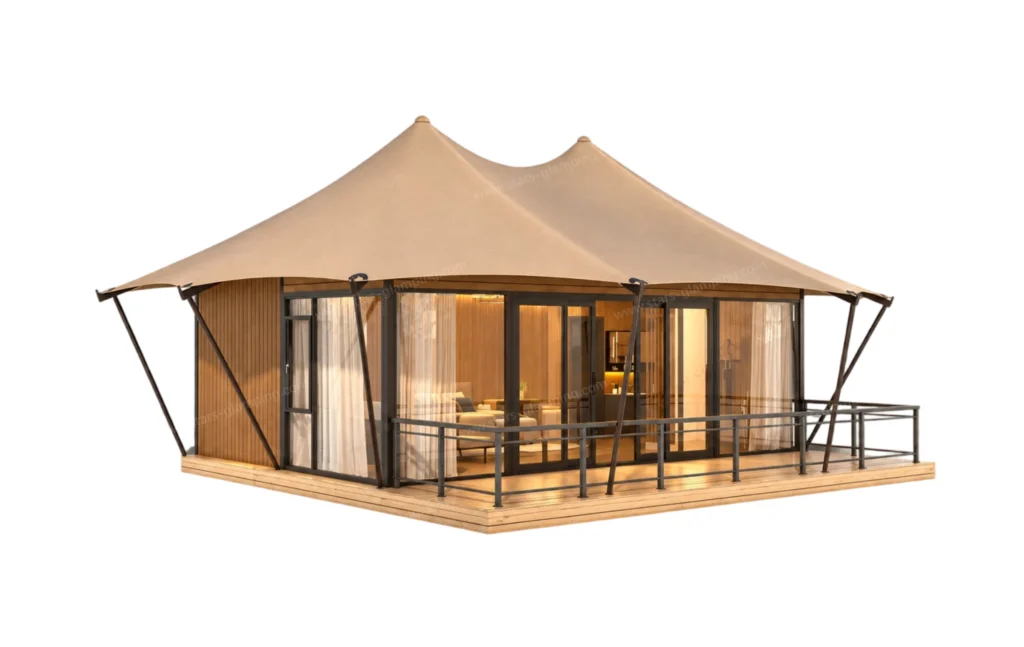
Solid wood remains the most common frame choice across the Safari Tent lineup, particularly for entry-level and boutique-style units. The Safari Tent – Venus, a classic A-frame entry-level model, combines a solid wood and steel frame to deliver natural aesthetics with structural reliability for family camping and small-scale glamping sites. Similarly, the Safari Tent – Milo uses a wooden frame structure described as offering high-strength support with premium visual appeal, allowing the tent to blend seamlessly into forest or mountain environments.
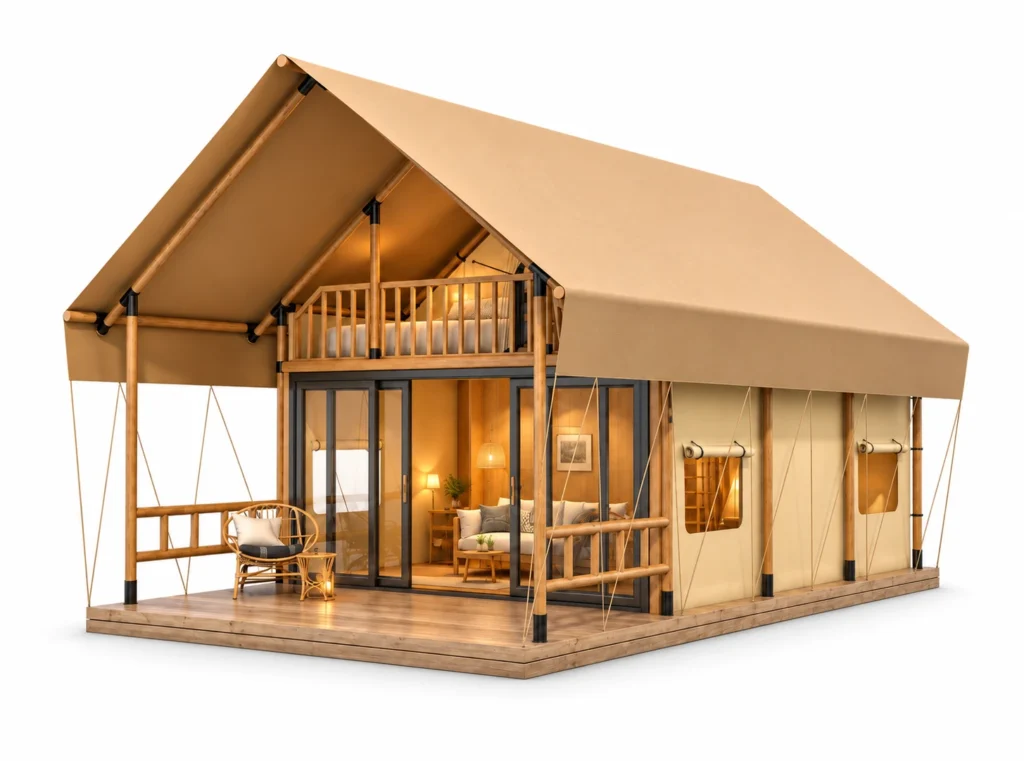
Higher-grade wood options appear in premium units as well. The Safari Tent – Superstar uses laminated wood poles measuring φ90mm for superior structural stability in large-scale units, while the Safari Tent – Epic features a Finnish Pinewood frame, described as a premium imported material chosen for strength and beauty. The Safari Tent – Virgo uses a solid pinewood frame valued for its eco-friendly and warm aesthetic, and the Safari Tent – Chalet, a forest cabin-style tent, relies on a solid wood frame to create a warm “cabin” atmosphere suited for year-round operation with insulated layers for thermal retention.
Wood frames are consistently paired with treatments to extend their service life: the company’s Technical Methods include anti-corrosion treated solid wood as a core material standard across the product line, ensuring that wood-framed units maintain structural reliability despite outdoor exposure.
Steel Frames: Built for Longevity and Harsh Climates
For projects prioritizing extended service life and resistance to corrosion, hot-dip galvanized steel is the frame technology emphasized throughout the knowledge base. According to the company’s Technical Metrics, steel frames carry a service life exceeding 10 years, making them a long-term infrastructure investment rather than a seasonal fixture.
The Safari Tent – Army, a durable arched-roof tent designed for long-term glamping projects, highlights this directly: its galvanized steel frame offers a service life exceeding 10 years, and its powder-coated frame provides maximum corrosion resistance. The Safari Tent – Octagon, an eight-sided pagoda-style landmark tent built for coastal and humid regions, uses an 80x80mm galvanized steel frame specifically engineered for coastal resilience and resistance to rust and corrosion — a critical consideration for beachfront resort projects. The Safari Tent – Hexagon similarly employs a hot-dip galvanized frame described as robust and maintenance-free, supporting its 32sqm interior that includes a walk-in closet and modular kitchen.
The Safari Tent – Taurus, positioned as a versatile, house-like all-season tent designed for performance in deserts, grasslands, and rainforests, offers flexible frame options including solid wood, aluminum alloy, or galvanized steel — illustrating how climate adaptability often drives frame selection toward metal construction in more extreme environments.
Hybrid Frames: Combining Strength with Natural Aesthetics
Several Safari Tent models use hybrid frame systems that blend the structural strength of steel with the visual warmth of wood. The Safari Tent – Pisces, an extended canopy tent for social gatherings, uses a galvanized steel and Finnish pole hybrid frame to achieve high-strength structural integrity while retaining a natural wood character. The Safari Tent – Pluto, a versatile dual-entrance tent for couples and small families, uses a plywood and steel hybrid frame specifically designed to balance natural warmth with structural strength.
This hybrid approach reflects StarsGlamping’s broader technology platform: modular structural systems that allow for rapid installation, disassembly, and relocation, regardless of whether the core material is wood, steel, or a combination of both.
Matching Frame Choice to Site Conditions and Business Goals
The company’s platform compatibility data shows that foundations can be adapted to grasslands, concrete, beaches, and deserts, but the frame itself still needs to suit the specific environmental stress of each location. For coastal and humid regions, galvanized steel options like those used in the Octagon model address rust and corrosion concerns directly. For forested or mountain retreats where guests expect a natural, cabin-like atmosphere, solid wood frames such as those in the Milo, Chalet, or Epic models deliver the desired aesthetic without sacrificing durability, thanks to anti-corrosion treatment. For large-scale, multi-season operations needing long-term structural reliability, galvanized steel frames exceeding a 10-year service life — as seen in the Army and Hexagon models — offer a more infrastructure-grade solution.
Budget and construction scale also factor into the decision. Larger units like the Safari Tent – Loft, a premium two-story glamping unit with an integrated second floor and staircase, or the Safari Tent – Heath, featuring a heavy-duty frame to support its large span structure safely, require frame systems engineered for greater load-bearing capacity, which often points toward steel or reinforced wood solutions.
Conclusion
There is no single frame material that is universally superior for every glamping project. Solid wood frames, enhanced with anti-corrosion treatment, deliver the natural warmth and premium visual appeal that many boutique retreats seek, as seen in the Milo, Virgo, and Epic models. Hot-dip galvanized steel frames, with a documented service life exceeding 10 years, are better suited to long-term installations and harsher climates, as demonstrated by the Army and Octagon models. Hybrid wood-and-steel frames, such as those used in the Pisces and Pluto, offer a middle path that balances aesthetics with structural performance. StarsGlamping’s Safari Tent Series — spanning hardware supply, customization, and modular expansion services — gives hospitality developers, camp operators, private landowners, and event planners the flexibility to choose the frame technology that matches their specific site conditions, climate, and guest experience goals.