RU_RU
RU_RU  EN
EN  ES
ES  AR
AR  DE_DE
DE_DE  FR
FR  PT
PT  IT
IT 
Almost every glamping camp investor holds one core worry: installed outdoors year-round under blazing sun, heavy downpours and strong gales, can glamping tents stay durable and safe? Will endless annual repairs eat up profits?
This factor directly decides camps’ maintenance expense, safety standard and payback period, and divides shoddy low-budget projects from premium long-profit camps. Conflicting opinions spread online: some claim tents break down within a single year, while others state a 10-year service lifespan. Supported with 2025 field test data, industrial material specifications and real camp cases, this article objectively analyzes glamping tent durability and weather resistance with practical buying advice for investors.
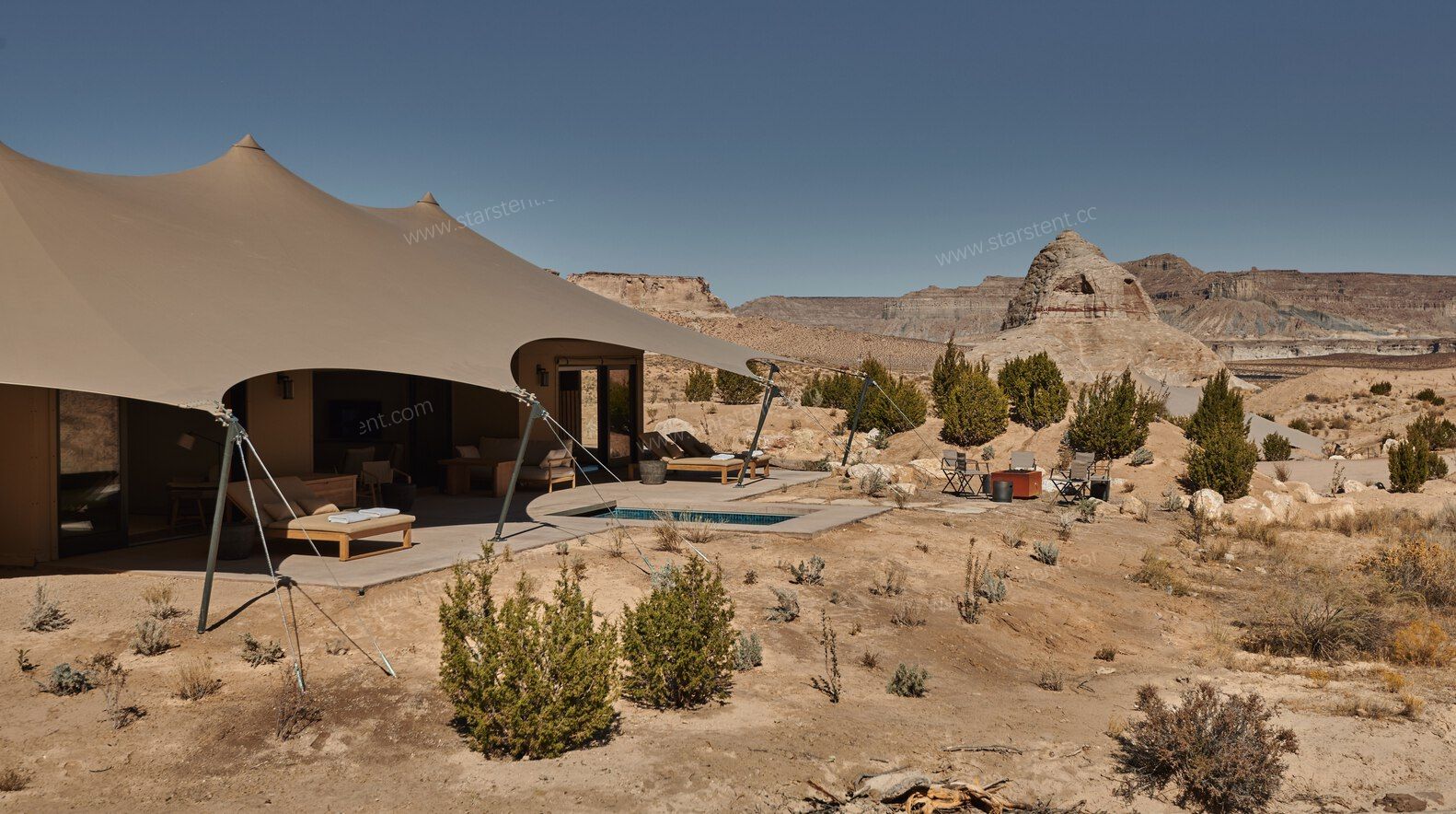
Authoritative test data from China Cultural Tourism Equipment Inspection Center clarifies misconceptions. Under Level 6 wind and 48 consecutive hours of heavy rainfall, unqualified cheap tents register an 83% water leakage rate plus 71% rust & deformation ratio of steel frames. After 12 months of persistent UV exposure, recycled fabric cracks severely and loses service capacity. In contrast, premium elaborately manufactured glamping tents withstand Level 12 winds and 72-hour continuous torrential rain. With certified UV protection, anti-corrosion and anti-age features, they boast an outdoor service life of 8–10 years, fully satisfying long-term camp operation standards.
The massive durability gap roots in raw material grade and production craft. To cut costs, budget tents adopt recycled PVC fabric, thin hollow steel tubes and inferior adhesive. Such materials have poor UV resistance and flexibility, prone to seepage, rust and distortion amid harsh weather and trigger excessive recurring maintenance fees. High-standard glamping tents utilize brand-new thick high-density PVC plus hot-dip galvanized solid heavy-gauge steel frames. High-frequency thermal fusion replaces traditional glue bonding to permanently avoid splitting, leakage and material aging.
Beyond wind and water resistance, anti-aging and extreme temperature tolerance are critical outdoor indicators. China features sharp climatic contrasts: the south suffers sweltering heat and prolonged plum rain; northern regions cope with freezing frost and frequent strong winds. Top-tier tents are coated with special functional layers to endure temperatures ranging from -30℃ to 70℃, resisting cracking, fading and deformation for stable all-year operation across all zones.
Many investors also inquire whether aged tents suffer poor sound insulation and heavy condensation to ruin guest experience.
It is a typical defect of cheap single-layer tents. Thin single-skin membranes create loud drumming noises in rain and trigger indoor dripping condensation from day-night temperature swings, leading to damp, stuffy rooms and bad reviews. Premium customized glamping tents adopt double-layer thick membrane with sound & thermal insulation filler sandwiched in between. The structure blocks noise and cross-ventilation, eliminates condensation and keeps indoor temperatures comfortable all year round, matching the coziness of traditional homestays.
Fine workmanship and strict quality control are as vital as qualified materials for long-term stable usage. Small informal workshops apply unstandardized production, resulting in misplaced drill holes, wide splicing gaps and loose welding; even decent raw materials end up leaking and loosening. Large formal manufacturers implement standardized production to secure detailed product quality.
Products from Stars Glamping excel in all-climate long-term outdoor usage. Backed by large production bases and CNC precision processing equipment, all steel cutting, drilling, welding and membrane splicing follow unified specifications for tight seams and balanced stress distribution. Every item passes repeated windproof, waterproof and anti-aging lab and field tests. Customized upgrades are available for varied climates: reinforced waterproof seams for rainy areas, upgraded thickened steel frames for windy northern & coastal sites and advanced sun-proof thermal coating for high-temperature locations.
Four Practical Tent Selection Rules for Investors
- Prioritize thermally sealed tents instead of glue-bonded options to eliminate hidden leakage risks;
- Choose heavy solid steel frame structures for northern and coastal high-wind regions;
- Pick double-layer insulated waterproof tents for humid and hot destinations;
- Cooperate with qualified original manufacturers with official warranty and full after-sales service to slash long-run maintenance costs.
In conclusion, glamping tent durability varies drastically by quality. Inferior items get discarded within a year while well-crafted premium models serve for a decade. Proper materials, mature craftsmanship and reliable manufacturers deliver safe, long-lasting glamping tents, lower ongoing operating costs and become core profit boosters for sustainable glamping camps.