ES
ES  EN
EN  AR
AR  DE_DE
DE_DE  RU_RU
RU_RU  FR
FR  PT
PT  IT
IT 
Against stricter national ecological supervision and environmental protection policies, traditional large-scale concrete construction in cultural tourism projects is no longer feasible. Facing rigid ecological redlines, woodland protection rules and complicated land approval processes, planners and developers are shifting to low-impact, eco-friendly development models. In the era of “protection-first and low-intensity development”, prefabricated glamping tents have become the optimal solution for compliant development in ecologically sensitive scenic areas.
Core Planning Pain Point: Conflict Between Landscape Resources and Land Indicators
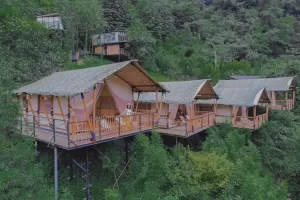
High-value tourism landscapes such as mountains, dense forests, wetlands and deserts are usually under the strictest ecological protection. Traditional permanent buildings require extensive foundation excavation and pipeline laying, causing irreversible damage to surface ecology. Such projects face lengthy approval cycles or outright rejection within ecological redline zones.
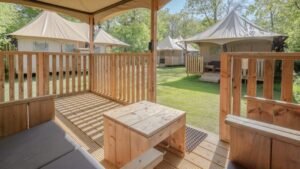
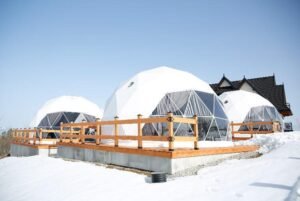
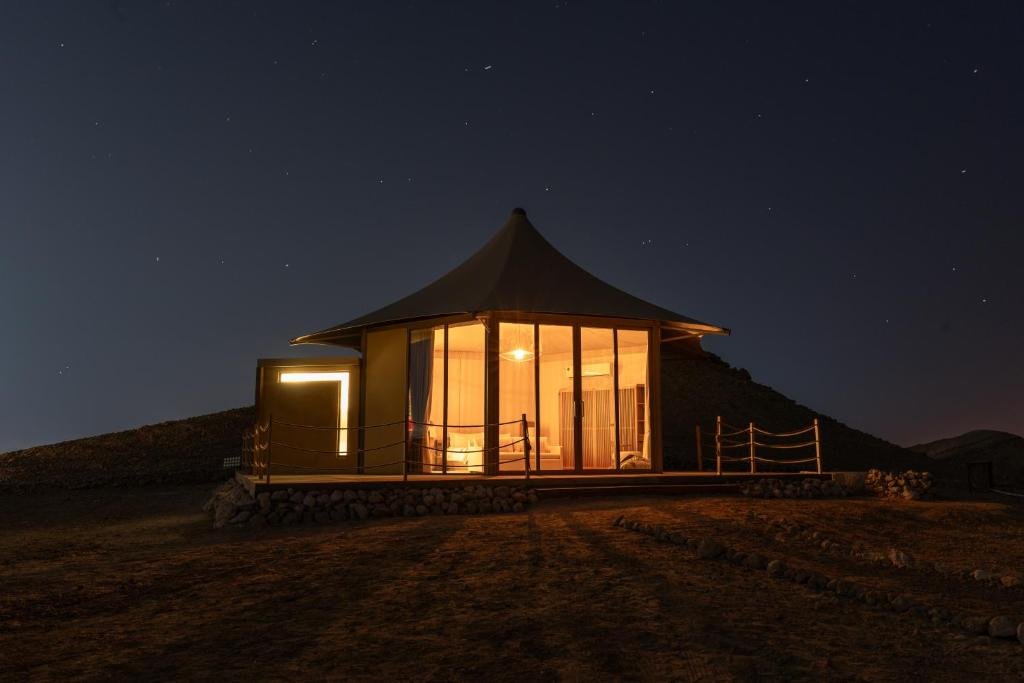
In contrast, prefabricated glamping tents are legally defined as removable temporary facilities. They do not change land attributes or damage surface vegetation, offering flexible, compliant development solutions for scenic and ecologically sensitive areas where traditional construction is prohibited.
Minimal Ecological Footprint: Low-Carbon & Zero-Disturbance Development
Premium tourism planning pursues seamless integration between architecture and nature, achieving zero ecological footprint. Glamping tents adopt non-destructive construction methods, replacing concrete foundations with steel platforms and recyclable ground screws. After project dismantling, the land can be fully restored to its original state with no permanent damage.
All structural and membrane components are precisely prefabricated in factories and assembled on-site in a modular “building-block” style. The entire construction process produces no dust, noise or construction waste, minimizing disturbances to local wildlife and ecological circulation and realizing true low-carbon scenic area development.
Global Trend: Prefabricated Glamping Becomes a Global Tourism Benchmark
Light-asset, eco-friendly glamping models are booming across the global tourism industry. In the past three years, China’s high-end prefabricated glamping tents have maintained steady export growth, widely recognized by international developers for their cost efficiency and environmental adaptability.
European and American mature markets account for 38% of total exports. Strict local environmental regulations and high labor costs drive local resorts to adopt Chinese high-end prefabricated tent solutions. The Middle East and Southeast Asian markets account for 26%, with Chinese prefabricated structures widely applied in world-class non-standard tourism projects such as Saudi Arabia’s Red Sea Project.
As a leading Chinese manufacturer, Stars Glamping has become a preferred partner for global tourism planners. Our products adopt professional wind-resistant structural calculation, extreme weather-resistant PVDF membrane materials and 6061-T6 high-strength aluminum alloy accessories. Supported by powerful flexible customization capabilities, we deliver stable, safe and eco-friendly glamping solutions for global high-end cultural tourism projects.
Summary
Prefabricated glamping tents perfectly resolve the core conflict between scenic resource development and ecological protection. With compliant land use, zero ecological damage, low construction impact and global market recognition, they have become the mainstream lightweight development tool for modern scenic transformation and high-end eco-tourism construction.