PT
PT  EN
EN  ES
ES  AR
AR  DE_DE
DE_DE  RU_RU
RU_RU  FR
FR  IT
IT 
With the upgrading of the cultural tourism industry and the booming development of the camping economy, glamping hotels have evolved from niche experiential products into popular options for scenic spots, resorts and rural tourism projects. An increasing number of investors are stepping into this sector, aiming to boost scenic spot attractiveness and profitability through differentiated accommodation products. However, first-time industry entrants tend to overly focus on product prices while ignoring the core factors that determine project success or failure.
In essence, the success of a glamping hotel project hinges on rational overall planning rather than the unit price of tents. Most new investors enquire directly about tent unit prices at the initial consultation stage, yet professional project operation follows a reverse logic: confirm project positioning first, then match supporting products.
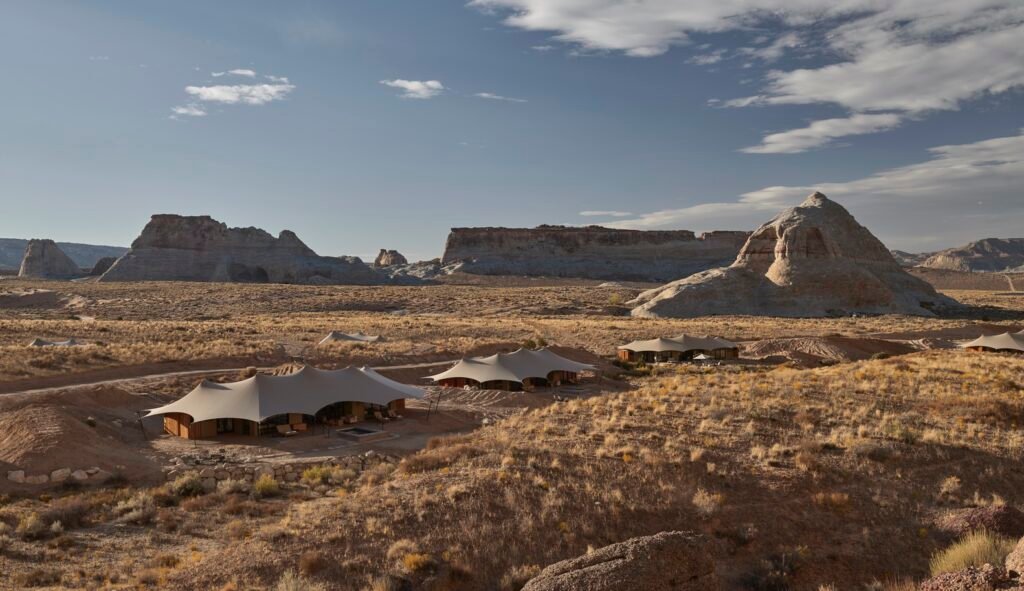
High-end luxury resort positioning prioritizes spatial experience, privacy and landscape integration. Parent-child camps focus more on safety, interactive space and multi-functional design. Internet-famous check-in themed projects attach greater importance to visual presentation and social communication attributes. Different positioning requires completely different product design logic, and misjudgment at this stage will lead to extremely high revision costs in the later operation period.
Beyond project positioning, climatic conditions are another easily overlooked yet critical factor. Though glamping hotels feature flexible construction, they serve as long-term outdoor operation facilities. Thus, extreme local environmental factors must be fully considered, including maximum wind speed, winter snowfall, temperature difference and humidity levels.
Coastal projects demand superior wind resistance; northern cold-region camps require excellent thermal insulation and snow load-bearing capacity; high-temperature and strong ultraviolet areas prioritize ventilation and material weather resistance. Inadequate pre-design adaptation to local environments will cause continuous maintenance cost surges and even affect normal operation, even with high-quality tent products.
Many investors fixate on initial construction costs, but long-term operational expenses instead dominate actual project returns. A seemingly low-cost tent may incur higher overall operational costs due to complicated maintenance, non-standard accessories and low cleaning efficiency. In contrast, tents with reasonable structural design, durable materials and high standardization can greatly reduce labor maintenance and energy consumption costs. Therefore, project feasibility assessment should focus on the 5 to 10-year comprehensive operation model rather than one-time initial investment.
Site selection is decisive for project success. The core advantage of glamping hotels lies in maximizing the utilization of natural resources, so sites with lake, forest, grassland and mountain landscapes boast stronger market competitiveness. Nevertheless, superior scenery alone is not enough. Traffic accessibility matters significantly. Projects far from core customer sources will face insufficient passenger flow despite beautiful surroundings. Proven successful camps are mostly located within a 2 to 3-hour driving radius of major consumer markets, ensuring stable and sustainable customer traffic.
Selecting a professional supplier is indispensable for investment success. A reliable glamping hotel supplier delivers systematic overall solutions rather than mere products, covering customized design, structural optimization, installation guidance and full-cycle after-sales maintenance. Experienced suppliers help investors avoid potential risks and reduce trial-and-error costs effectively.
As a professional glamping solution provider, Stars Glamping (Xingtu Tent) owns a 25,000-square-meter production base and multiple physical exhibition spaces. Investors can intuitively observe the actual application effect of various tent models in real scenarios, which is far more practical than design drawings and parameter data, especially for first-time investors.
From an industry perspective, glamping hotels represent a long-term development trend driven by consumption upgrading, not a fleeting market fad. Modern tourists no longer settle for basic accommodation services but pursue immersive, design-oriented and shareable outdoor vacation experiences. This shifting demand has transformed glamping hotels from auxiliary accommodation facilities into core attraction resources for numerous scenic spots.
In summary, first-time glamping hotel investors should prioritize project positioning over product selection. Only by clarifying project orientation, adapting to local climatic conditions, optimizing long-term operational costs and cooperating with trustworthy suppliers can glamping projects achieve stable long-term returns instead of relying on temporary tourism popularity.